What Is a Two Stage Piston Compressor?
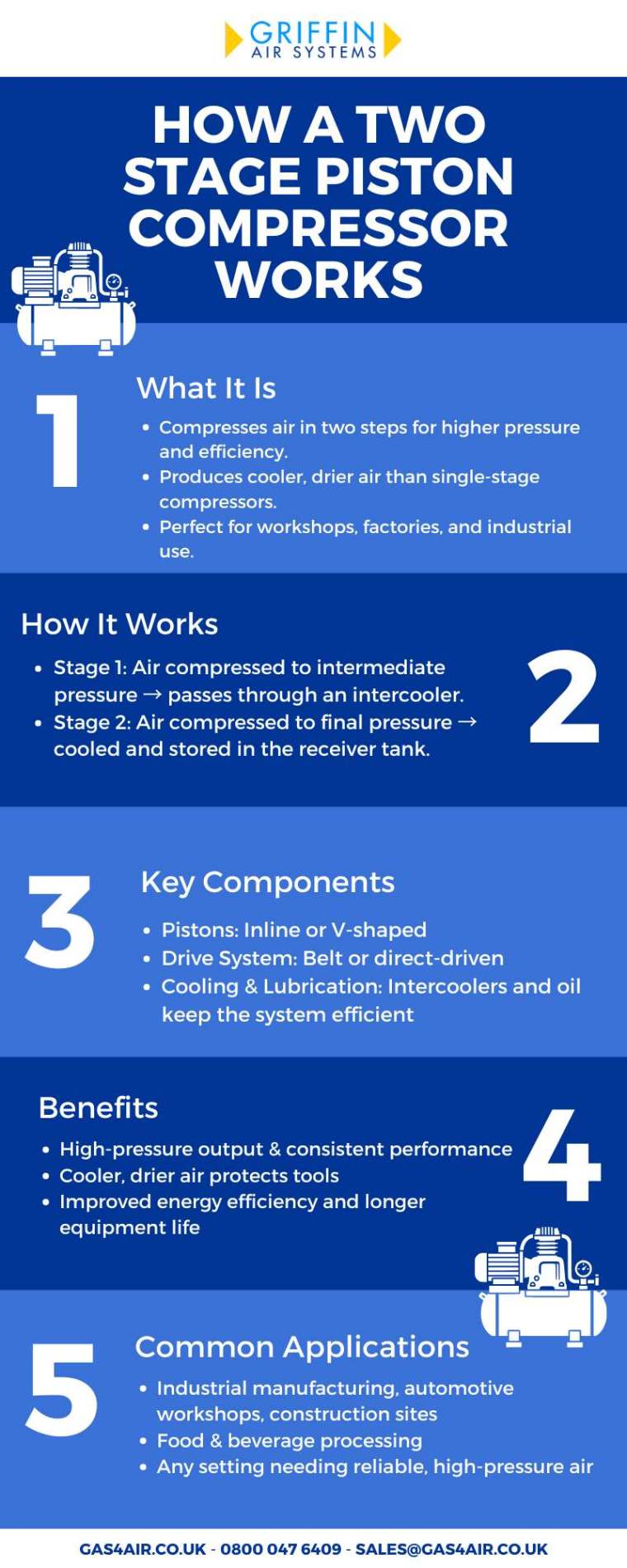
A two stage piston compressor is a type of air compressor designed to generate higher pressure air more efficiently than a single-stage compressor. It achieves this by using two compressor stages, where air is compressed in two steps rather than one. This makes it ideal for industrial workshops, manufacturing plants, and businesses across the UK that require consistent high-pressure air.
The first stage of a two stage piston compressor compresses air to an intermediate pressure. The partially compressed air then moves to the second stage, where it reaches the final high pressure. This method not only improves efficiency but also reduces heat build-up and extends the life of the compressor.
Compared to single-stage compressors, two stage piston compressors deliver cooler, drier air that is safer for tools and machinery. They are commonly used where continuous, high-pressure air is essential, and understanding how each air compressor stage works helps businesses choose the right system for their needs.
How Do Air Compressor Stages Work?
Air compressor stages refer to the separate steps in which a two stage piston compressor increases air pressure. In a two stage system, air is compressed twice, allowing the compressor to achieve higher pressure more efficiently than a single-stage unit. Understanding these compressor stages is key for businesses that rely on consistent, high-pressure air.
Understanding the First Compression Stage
The first air compressor stage draws air into the low-pressure cylinder. The piston compresses the air to an intermediate pressure, usually around 70 to 90 psi. Compression increases the air temperature, so the air passes through an intercooler to reduce heat. Cooler air improves efficiency and protects the compressor components.
The first compression stage prepares the air for the high-pressure stage. It ensures the air enters the second cylinder at a manageable pressure, reducing strain on the compressor and improving overall performance.
Understanding the Second Compression Stage
In the second air compressor stage, the partially compressed, cooled air enters the high-pressure cylinder. The piston compresses the air to the final required pressure, often between 150 and 200 psi for industrial use.
After the second stage, the air moves into a receiver tank where it is stored for use. The cooler, drier air produced at this stage protects tools and machinery, improves efficiency, and ensures consistent high-pressure performance for UK businesses.
Technical Details of Two Stage Piston Compressors
Two stage piston compressors include several design features that affect performance, efficiency, and suitability for different UK industrial applications. Understanding these details helps businesses select the right compressor for their needs.
Piston Arrangement
Two stage compressors can have inline (tandem) or V-shaped piston arrangements. Inline configurations have both pistons on the same shaft, one after the other, which makes the compressor compact and easy to maintain. V-shaped configurations place pistons at an angle, improving balance and reducing vibration during operation.
Drive Systems
Compressors can be direct-driven, where the motor is directly connected to the crankshaft, or belt-driven, using a belt to transfer power. Belt-driven systems allow for smoother operation and easier replacement of parts, while direct-driven compressors are generally more compact and efficient for continuous industrial use.
Intercoolers and Aftercoolers
An intercooler sits between the first and second compression stages, reducing the temperature of the air before it enters the high-pressure cylinder. Cooler air improves efficiency and protects the compressor from overheating. An aftercooler can be added after the second stage to remove additional heat and moisture before the air reaches the receiver tank, producing cleaner, drier air for tools and machinery.
Pressure Ranges
Two stage compressors typically compress air to intermediate pressures of 70–90 psi in the first stage and final pressures of 150–200 psi in the second stage. These pressure ranges are ideal for UK workshops, factories, and automotive applications that require consistent high-pressure air.
Cooling and Lubrication
Proper cooling and lubrication systems ensure reliability. Two stage compressors often use oil-lubricated pistons, which reduce friction and extend component life. Cooling systems, combined with intercoolers, prevent overheating during continuous operation, making them suitable for demanding industrial environments.
Maintenance and Safety Tips for Two Stage Piston Compressors
Regular maintenance keeps a two stage piston compressor running efficiently and protects each air compressor stage from wear. Simple checks can prevent breakdowns and extend the life of the system.
Routine Maintenance
Regular inspections help both compressor stages perform at the correct pressure.
- Check and replace oil when needed
- Clean or change air filters
- Inspect hoses and connections for leaks
- Monitor pressure levels
Moisture Control
Moisture forms during each compression stage and can damage equipment.
- Drain the receiver tank regularly
- Use automatic drains where possible
- Ensure air remains clean and dry
Cooling and Airflow
Cooling systems support efficient operation across all air compressor stages.
- Keep intercoolers clean and free from debris
- Maintain good airflow around the compressor
Safe Operation
High-pressure systems require careful handling.
- Do not exceed recommended pressure limits
- Check safety valves regularly
- Isolate the compressor before maintenance
Key Advantages of Two Stage Air Compressors
Two stage piston compressors offer several benefits for businesses that need reliable, high-pressure air.
- Higher pressure output – Two compressor stages allow the system to reach pressures up to 200 psi, suitable for industrial applications.
- Improved efficiency – Compressing air in two stages reduces heat and energy waste, keeping operations cost-effective.
- Cooler air – Intercoolers lower the temperature between air compressor stages, producing cooler air that protects tools and machinery.
- Drier air – Moisture condenses during compression, reducing water in the output air and preventing damage to equipment.
- Longer equipment life – Lower temperatures and reduced motor strain increase the lifespan of the compressor.
- Consistent performance – Two stage piston compressors maintain stable pressure even during heavy use.
Common Applications of Two Stage Compressors
Two stage piston compressors are widely used in industries and workshops where high-pressure, reliable air is essential:
Industrial Manufacturing
Two stage piston compressors supply high-pressure air for pneumatic machinery, assembly lines, and automated systems in factories. The two compressor stages reduce heat and deliver consistent airflow, which prevents equipment downtime and ensures smooth production. They are ideal for processes that require continuous operation, such as stamping, molding, or metal fabrication.
Automotive Workshops
In automotive workshops, two stage compressors power air tools like impact wrenches, spray guns, and tyre inflators. The cooler, drier air produced by the air compressor stages improves tool performance and prevents corrosion in pneumatic components. High-pressure output from the second stage ensures fast and efficient operations, even during peak workloads.
Construction Sites
Construction equipment such as jackhammers, drills, and nail guns rely on steady, high-pressure air. Two stage compressors maintain output even in demanding environments, and the improved air quality reduces wear on tools. For mobile or temporary setups, UK construction teams often choose portable two stage compressors for their combination of reliability and efficiency.
Food and Beverage Processing
Compressors are used in food and beverage production for packaging, bottling, and cleaning systems. Two stage piston compressors provide dry, contaminant-free air, which is crucial for hygiene-sensitive applications. The second air compressor stage ensures stable high pressure, which improves machine accuracy and reduces the risk of defects or downtime.
UK Commercial Settings
Across UK workshops, garages, and production facilities, two stage compressors support a wide range of applications. Businesses benefit from lower energy costs due to higher efficiency, reduced maintenance needs, and longer equipment lifespan. The combination of cooler air, higher pressure, and reliability makes them a preferred choice for commercial operations.
Key Takeaways for Two Stage Piston Compressors
- Two stage piston compressors increase air pressure in two steps, improving efficiency and reducing heat compared to single-stage systems.
- Air compressor stages work together: the first stage compresses air to an intermediate pressure, and the second stage raises it to the final high pressure.
- Intercoolers and aftercoolers between stages reduce air temperature and moisture, producing cooler, drier air for tools and machinery.
- Technical design matters: piston arrangement, drive system, and lubrication all affect reliability and performance.
- Regular maintenance is essential: check oil, clean filters, drain tanks, and inspect cooling systems to protect each compression stage.
- Key benefits for UK businesses include higher pressure output, consistent performance, improved efficiency, longer equipment life, and safer operation for industrial and commercial use.
- Common applications span workshops, automotive repair, construction, food and beverage processing, and other industrial settings where high-pressure air is critical.
FAQs
What is the difference between a single-stage and two stage piston compressor?
A two stage piston compressor compresses air in two separate stages, while a single-stage compressor compresses air in one step. The two stage system produces higher pressure efficiently, delivers cooler, drier air, and reduces wear on tools and machinery. Single-stage compressors are generally simpler and suitable for lighter tasks, whereas two stage compressors are ideal for UK workshops, industrial plants, and continuous high-pressure applications.
How often should I maintain a two stage air compressor?
Maintenance frequency depends on usage, but daily checks of oil levels, pressure, and tank moisture are recommended for industrial use. Filters and cooling components should be inspected weekly, and a full professional service every 6–12 months helps ensure both compressor stages operate efficiently. Proper maintenance prevents downtime, extends equipment life, and keeps air clean and dry for tools.
What industries use two stage piston compressors in the UK?
Two stage piston compressors are widely used in industrial manufacturing, automotive workshops, construction sites, and food and beverage processing. They are chosen for applications that require stable high-pressure air, cooler output, and reliable performance. UK commercial facilities benefit from the efficiency, lower energy costs, and extended equipment life offered by two stage compressors.
Optimise Your Workshop with Griffin Two Stage Compressors
Understanding how a two stage piston compressor works helps UK businesses choose the right equipment, maintain efficiency, and extend the lifespan of their tools and machinery. From the first and second air compressor stages to maintenance best practices, two stage compressors deliver reliable, high-pressure air for workshops, industrial plants, and commercial applications.
Griffin offers a full range of high-quality two stage compressors designed for performance, durability, and efficiency. Whether you need guidance on selecting the right system, routine servicing, or installation support, Griffin can help your business achieve consistent, high-pressure air and reduce operational downtime.
Take the next step today. Explore our compressor range or get in touch via the contact page to find the perfect two stage piston compressor for your UK business.
Related Articles