What Is a Single Stage Piston Compressor?
A single stage piston compressor compresses air in one stroke using a single piston before storing it in a tank.
The main difference between this and more complex systems lies in how the air is compressed. In a single stage model, everything happens in one motion, which keeps the design simple and easy to maintain.
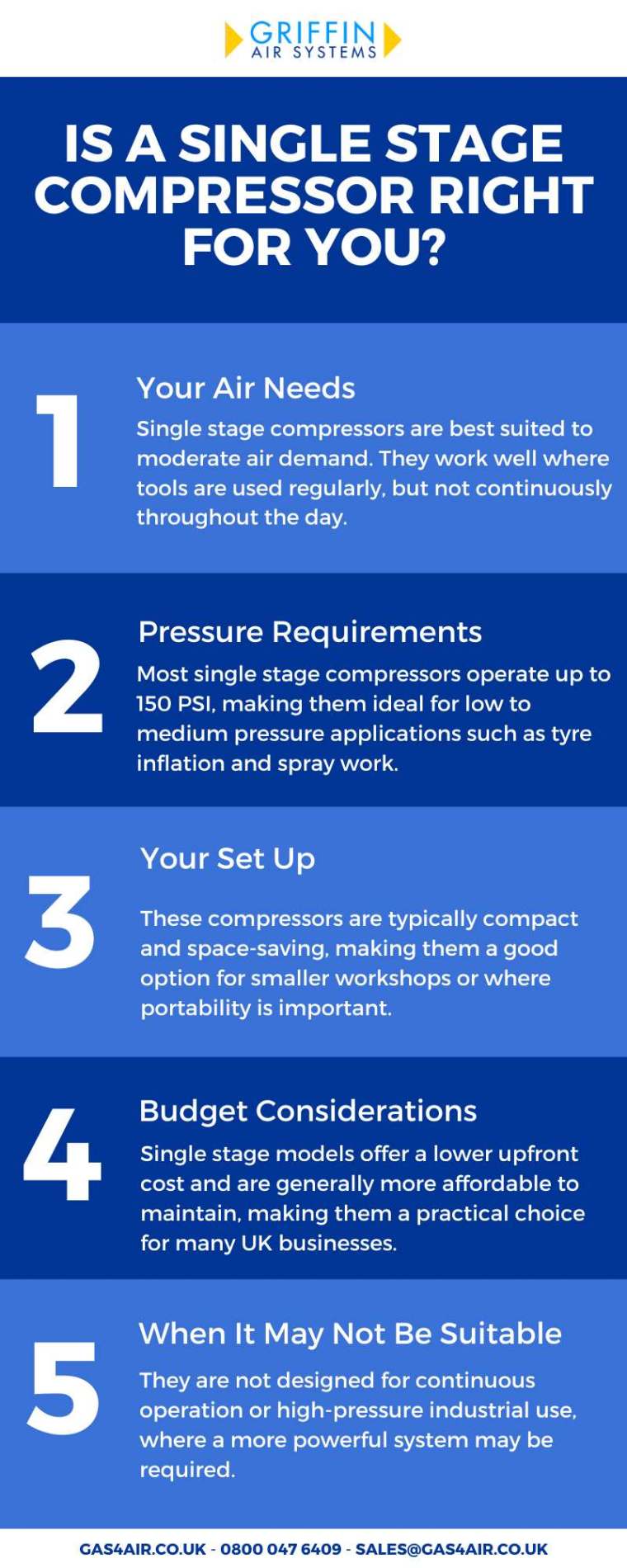
Most units operate at up to around 150 PSI, making them well suited to light and moderate applications rather than heavy industrial use.
How Does a Single Stage Compressor Work?
A single stage compressor draws in air, compresses it once, and stores it for use.
In simple terms, air enters the cylinder, the piston compresses it, and the compressed air is then transferred into a storage tank. When needed, that air is released to power tools or equipment.
Because the process involves only one compression cycle, the system is generally more straightforward and cost-effective than multi-stage alternatives.
When Should You Choose a Single Stage Compressor?
You should choose a single stage piston compressor when your air demand is moderate and does not require constant, high-pressure output.
This type of compressor is particularly well suited to environments where tools are used intermittently rather than continuously. For example, a workshop using spray guns or inflating tyres throughout the day but not running machinery non-stop would benefit from this setup.
Signs a Single Stage Compressor Is Right for You
- Your required pressure is below 150 PSI
- You do not need continuous operation
- You are working with a limited budget
- Space is restricted or portability is important
However, if your operation relies on continuous airflow or higher pressures, this type of compressor may struggle to keep up.
What Industries Benefit Most from Single Stage Compressors in the UK?
Single stage compressors are commonly used in industries where compressed air is needed regularly, but not at high intensity.
Automotive workshops are a good example, where they are used for tyre inflation and spray painting. They are also widely used in construction for powering handheld tools, as well as in agriculture for general maintenance tasks.
Typical Applications Include:
- Inflating tyres and operating air tools
- Spray painting and finishing work
- Light assembly and maintenance tasks
Their popularity across the UK comes down to practicality. They do the job reliably without the higher costs associated with industrial systems.
Single Stage vs Two Stage Compressors: Which Is Better?
The better option depends entirely on how you plan to use the compressor.
A single stage compressor is designed for lighter workloads and lower pressure requirements, while a two-stage system is built for higher pressure and longer run times.
Key Differences at a Glance:
- Single stage: lower cost, simpler design, suited to intermittent use
- Two stage: higher output, more efficient under load, better for continuous operation
If your work is occasional or moderate, a single stage unit will usually meet your needs without unnecessary expense.
Learn more about single stage vs two stage air compressors.
Key Factors in Compressor Type Selection
Choosing the right compressor starts with understanding how it will be used in practice.
Pressure requirements are one of the most important considerations. If your tools operate below 150 PSI, a single stage compressor is typically sufficient. Alongside this, airflow (measured in CFM) determines how much air the system can deliver over time.
Core Factors to Consider:
- Required PSI for your tools
- Airflow (CFM) demands
- Frequency of use (intermittent vs continuous)
- Budget and long-term running costs
Taking the time to assess these factors will help ensure you choose the most suitable system for your needs.
Advantages and Limitations of Single Stage Compressors
Like any equipment, single stage compressors come with both strengths and limitations.
One of their biggest advantages is cost. They are typically more affordable to purchase and maintain. Their simpler design also means fewer components can fail, which helps reduce downtime.
Advantages:
- Lower upfront investment
- Simple and reliable operation
- Compact and space-saving
- Easier maintenance
Limitations:
- Restricted pressure output
- Not designed for continuous use
- Less efficient for demanding applications
Understanding these trade-offs is key to making the right decision. Still unsure? Contact our experts to discuss your options.
Key Takeaways for Single Stage Piston Compressor
- A single stage piston compressor is best suited to light or moderate use
- It typically operates up to around 150 PSI
- Ideal for workshops, trades, and smaller UK businesses
- Offers a cost-effective and straightforward solution
- Not suitable for continuous, high-demand applications
Frequently Asked Questions
Which air compressor do I need for a small workshop?
In most cases, a single stage piston compressor is sufficient for a small workshop, as it can handle common tools while remaining affordable and easy to run.
Is a single stage compressor powerful enough for professional use?
Yes, it can be suitable for professional use where demand is moderate, such as in automotive or maintenance environments that do not require constant airflow.
What is the difference between single stage and piston compressors?
A piston compressor refers to the mechanism used to compress air, while a single stage compressor describes how many compression cycles are involved, just one in this case.
How long does a single stage compressor last?
With proper maintenance, a single stage compressor can last for several years, although heavy or continuous use may shorten its lifespan.
Power Your Operations with Griffin Air Systems
Choosing the right compressor is ultimately about matching the equipment to your actual needs. As we have explored, a single stage piston compressor is an excellent option for many UK businesses that require reliable performance without the complexity or cost of larger systems.
At Griffin Air Systems, we help you cut through the confusion around compressor type selection and ensure you get a solution that works long term. Whether you are upgrading existing equipment or starting from scratch, our team is here to guide you every step of the way.
Get in touch today to find the right compressed air system for your business.
Related Articles