
A reliable compressed air system is critical to productivity, safety, and energy efficiency across UK industries, from manufacturing and automotive to food production and construction. This guide is designed for facilities managers, engineers, and business owners looking for a practical air compressor maintenance checklist that supports compliance, reduces downtime, and extends equipment life. Drawing on best-practice air compressor maintenance tips used by professionals across the UK, this article explains how to carry out a basic but effective air compressor health check.
We’ll cover essential air compressor inspection requirements, highlight common warning signs, and explain when servicing compressors should be left to certified specialists like Griffin Air Systems, a trusted UK-wide compressed air partner. Read on for a step-by-step breakdown and expert insights to help you protect your investment.
Table of Contents:
- Why Regular Air Compressor Health Checks Matter
- Understanding Your Air Compressor System
- Pre-Check Safety and Preparation
- Visual Inspection: The First Line of Defence
- Checking Oil Levels and Lubrication Systems
- Inspecting Air Filters and Intake Systems
- Monitoring Pressure, Temperature, and Performance
- Drainage, Moisture Control, and Condensate Management
- Listening for Unusual Noises and Vibration
- Reviewing Electrical Components and Controls
- When Basic Checks Aren’t Enough: Professional Servicing
Why Regular Air Compressor Health Checks Matter
Regular air compressor health checks reduce breakdowns, improve efficiency, and ensure compliance with UK safety standards.
Compressed air systems are often described as the “fourth utility” in industrial environments, yet they are frequently overlooked until something goes wrong.
Failing to follow a structured air compressor maintenance checklist can lead to:
- Increased energy consumption and higher electricity bills
- Unexpected downtime and lost production
- Reduced air quality affecting tools, products, or processes
- Premature component failure and costly repairs
In the UK, air compressor inspection requirements are also linked to PUWER and PSSR regulations, making routine checks not just good practice but a legal necessity in many settings.
Understanding Your Air Compressor System
Knowing your compressor type is essential because maintenance requirements vary.
Most UK industrial sites operate:
- Rotary screw compressors (fixed or variable speed)
- Piston (reciprocating) compressors
- Oil-free compressors for sensitive applications
Each system has different servicing compressors intervals and inspection points. If you’re unsure, Griffin Air Systems offers guidance through its air compressor supply and installation services.
Key Components to Be Aware Of
Before starting any checks, you should understand the main components:
- Compressor element or pump
- Electric motor
- Lubrication system
- Intake and air filtration
- Aftercoolers and dryers
- Receiver (air tank)
Familiarity makes fault detection faster and more accurate.
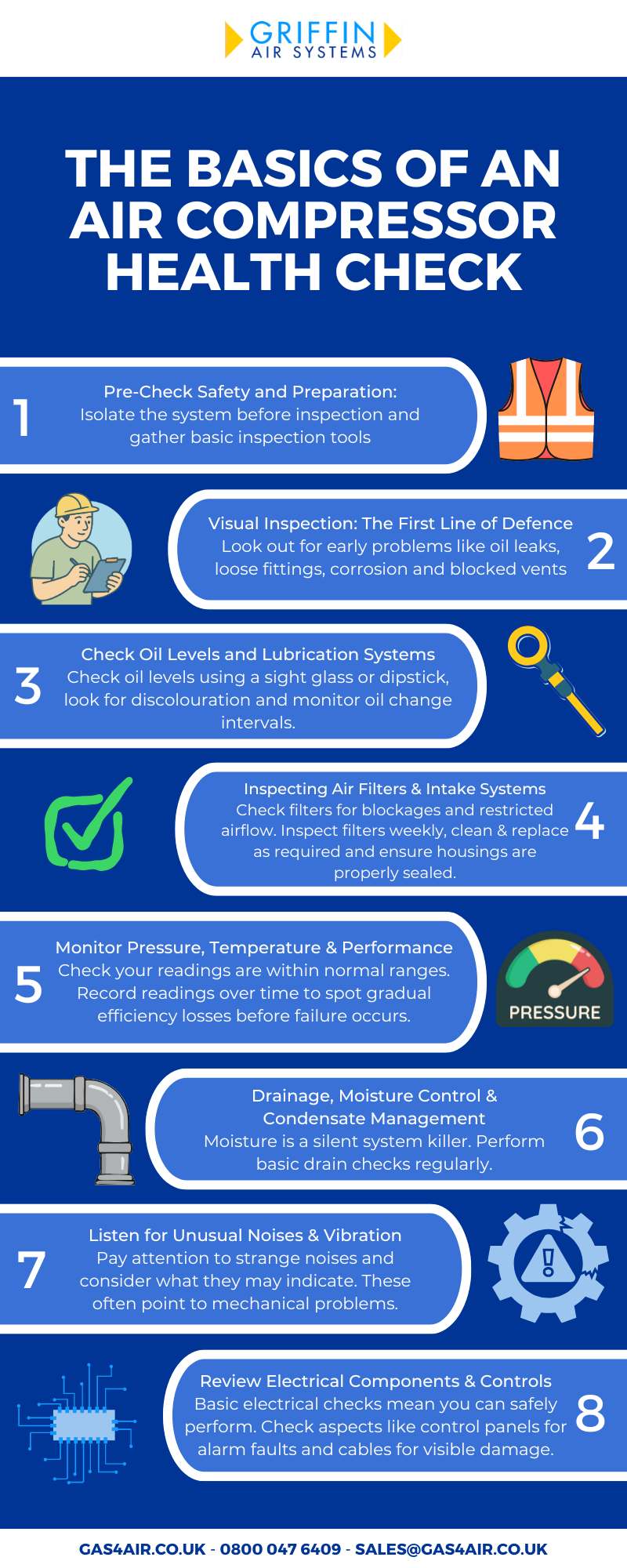
Pre-Check Safety and Preparation
Isolate the System Before Inspection
Safety always comes first when carrying out air compressor maintenance.
Before any health check:
- Switch off the compressor
- Isolate the power supply
- Depressurise the system where required
- Allow hot components to cool
This reduces the risk of electric shock, burns, or sudden pressure release.
Gather Basic Inspection Tools
You don’t need specialist equipment for a basic check, but it helps to have:
- Clean cloths or wipes
- Torch
- Pressure and temperature readings from the control panel
- Maintenance logbook
Recording findings supports trend analysis and helps when servicing compressors professionally.
Visual Inspection: The First Line of Defence
What Should You Look for During a Visual Check?
A visual inspection is the quickest way to identify early problems.
You should look for:
- Oil leaks around seals and hoses
- Loose fittings or damaged pipework
- Corrosion on the receiver or pipework
- Blocked vents or cooling fins
Any visible damage should be logged and addressed promptly to avoid escalation.
Why Visual Checks Support Compliance
Visual inspections form part of basic air compressor inspection requirements and demonstrate due diligence under UK workplace safety legislation.
Checking Oil Levels and Lubrication Systems
Why Oil Health Is Critical for Compressor Performance
Correct lubrication reduces friction, manages heat, and protects internal components. Low or contaminated oil is one of the most common causes of compressor failure.
Basic Oil Checks You Can Perform
As part of your air compressor maintenance checklist:
- Check oil level using the sight glass or dipstick
- Look for discolouration or milky oil (a sign of moisture contamination)
- Monitor oil change intervals recommended by the manufacturer
For oil-free compressors, lubrication checks focus more on bearings and seals, which should still be inspected by professionals.
Inspecting Air Filters and Intake Systems
How Dirty Filters Affect Efficiency
Blocked air filters restrict airflow, forcing compressors to work harder and consume more energy. This directly increases operating costs and reduces air quality.
Simple Filter Maintenance Tips
Effective air compressor maintenance tips include:
- Inspecting intake filters weekly in dusty environments
- Cleaning or replacing filters as required
- Ensuring housings are sealed correctly
Griffin Air Systems supplies replacement filters and genuine compressor parts to ensure optimal performance.
Monitoring Pressure, Temperature, and Performance
Are Your Readings Within Normal Ranges?
Monitoring operational data is essential for early fault detection.
Check:
- Discharge pressure stability
- Operating temperature
- Load/unload or variable speed behaviour
Unusual fluctuations often indicate leaks, worn components, or control issues.
Why Data Trends Matter
Recording readings over time allows you to spot gradual efficiency losses before failure occurs. This is a core principle of proactive servicing compressors strategies.
Drainage, Moisture Control, and Condensate Management
Why Moisture Is a Silent System Killer
Compressed air naturally contains moisture, which can damage tools, pipework, and end products. Unchecked condensate leads to corrosion, pressure loss, and contamination.
Basic Drain Checks to Perform
As part of routine air compressor inspection requirements:
- Ensure manual drains are operated regularly
- Check automatic condensate drains are functioning
- Inspect air dryers for alarms or faults
For critical applications, Griffin Air Systems provides air treatment and dryer solutions tailored to UK operating conditions.
Listening for Unusual Noises and Vibration
Unusual sounds often point to mechanical problems.
Listen for:
- Knocking or grinding noises
- High-pitched squealing
- Excessive vibration
These symptoms can indicate bearing wear, misalignment, or loose components.
When to Escalate Concerns
If noise persists after basic checks, stop the machine and arrange professional inspection. Continuing operation may cause serious damage.
Reviewing Electrical Components and Controls
Basic Electrical Checks You Can Safely Perform
While advanced electrical work should be left to engineers, you can:
- Check control panels for alarms or fault codes
- Inspect cables for visible damage
- Ensure ventilation around electrical enclosures
Electrical faults are a common cause of unexpected downtime and should never be ignored.
When Basic Checks Aren’t Enough: Why Professional Servicing is Essential
Basic checks support daily reliability, but they don’t replace scheduled servicing compressors by qualified engineers.
Professional servicing includes:
- Element inspection and replacement
- Oil analysis
- Calibration of controls
- Leak detection surveys
How Griffin Air Systems Supports UK Businesses
Griffin Air Systems delivers UK-wide compressor servicing, breakdown response, and maintenance contracts, helping businesses remain compliant, efficient, and productive. Learn more about our air compressor servicing and maintenance solutions..
Key Takeaways for Air Compressor Maintenance Checklist
- Regular health checks reduce downtime, energy waste, and repair costs
- A structured air compressor maintenance checklist supports compliance and reliability
- Visual inspections, oil checks, and filter maintenance can be done in-house
- Monitoring pressure, temperature, and moisture prevents hidden damage
- Servicing compressors professionally ensures long-term system performance
- Griffin Air Systems provides expert support across the UK for all compressor types
FAQs
How often should I carry out an air compressor health check?
A basic air compressor health check should be carried out weekly, with daily visual checks in high-demand environments.
More detailed inspections and servicing compressors should follow manufacturer guidelines and usage intensity.
What are the main air compressor inspection requirements in the UK?
UK air compressor inspection requirements typically relate to PUWER and PSSR regulations, requiring systems to be safe, maintained, and inspected regularly. Receiver vessels often require written schemes of examination.
Can poor maintenance increase energy costs?
Yes, poor maintenance significantly increases energy consumption. Blocked filters, leaks, and inefficient operation can raise running costs by up to 30%, making regular air compressor maintenance tips essential for cost control.
Elevate Your Compressed Air Reliability with Griffin Air Systems
A well-maintained compressed air system is essential for efficiency, safety, and profitability. By following this guide and implementing a consistent air compressor maintenance checklist, you can prevent failures and extend equipment life. However, basic checks are only part of the solution.
For expert servicing compressors, system audits, energy efficiency improvements, and compliant maintenance support, Griffin Air Systems is your trusted UK partner.
Explore our compressed air servicing solutions or contact Griffin Air Systems today to book a professional health check.