
Food and medical industries demand the highest standards of hygiene and safety, especially when it comes to compressed air. Whether it’s a food processing line in Manchester or a dental clinic in London, ensuring that the air supply is contaminant-free is non-negotiable. For businesses across the UK, choosing the right equipment, such as a food grade air compressor or dental oil free air compressor, is critical to maintaining quality, safety, and compliance. This blog explores whether oil free compressors are the best choice for these sensitive applications and why a non lubricated air compressor may be a better long-term investment for your operations.
Before diving in, we’ll break down the benefits, applications, and technical considerations that will help you make an informed decision for your business.
Table of Contents
- What Are Oil-Free Compressors and How Do They Differ from Lubricated Models?
- Why Food and Medical Industries Prefer Oil-Free Compressors UK
- Key Applications of Food Grade and Dental Oil Free Air Compressors
- Advantages of Using Non Lubricated Air Compressors
- Common Misconceptions About Oil-Free Compressors
- Choosing the Right Food Compressor for Your Facility
- Key Takeaways for Food and Medical Applications
- Frequently Asked Questions
What Are Oil-Free Compressors and How Do They Differ from Lubricated Models?
Oil-free compressors, also known as non lubricated air compressors, operate without the use of oil in the compression chamber. This is in contrast to traditional lubricated compressors, where oil is used to reduce friction and cool the compressor parts.
How Oil-Free Compressors Work
Oil-free compressors rely on materials such as Teflon-coated pistons, stainless steel, or ceramic components to ensure smooth operation. This eliminates the risk of oil contamination, which is crucial for industries like food processing and healthcare where clean, contaminant-free air is essential.
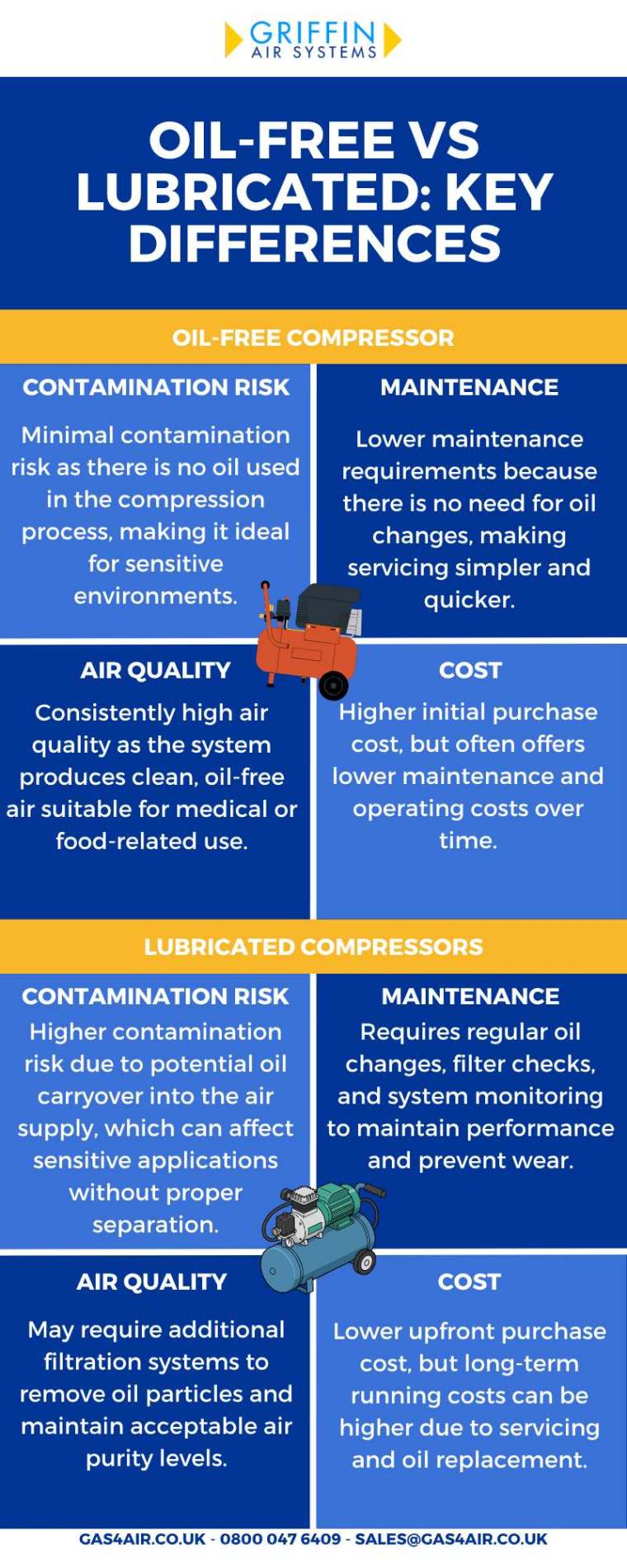
Oil-Free vs Lubricated: Key Differences
| Feature | Oil-Free Compressor | Lubricated Compressor |
| Contamination Risk | Minimal | Higher due to oil carryover |
| Maintenance | Lower, no oil changes | Requires regular oil changes and monitoring |
| Air Quality | Consistently high | May require filtration to remove oil particles |
| Cost | Higher initial investment | Lower upfront cost but higher long-term costs |
By understanding these differences, UK businesses can better assess which type of compressor aligns with their operational needs.
Why Food and Medical Industries Prefer Oil-Free Compressors UK
The food and medical sectors have stringent hygiene and compliance standards. In many cases, regulators require food grade air compressors to prevent contamination.
Maintaining Hygiene Standards
Oil-free compressors eliminate the risk of oil mixing with food products or medical tools. In a bakery, brewery, or hospital, even trace amounts of oil in compressed air can compromise safety and lead to costly recalls or regulatory fines.
Regulatory Compliance
- Food Safety Modernization Act (FSMA) compliance in food manufacturing
- ISO 22000 for food safety management
- Medical standards including ISO 13485 for medical devices
Choosing oil free compressors ensures your equipment meets these rigorous standards while providing reliable, high-quality air.
Environmental and Operational Benefits
Oil-free technology also supports sustainability initiatives. Without oil, there’s less waste to manage, and energy efficiency often improves due to reduced friction. This makes non lubricated air compressors a preferred choice for environmentally-conscious UK facilities.
Key Applications of Food Grade and Dental Oil Free Air Compressors
Food Processing Plants
In food production, air comes into direct contact with consumables. Examples include:
- Packaging and bottling lines
- Conveyor systems
- Pneumatic control of machinery
Using a food grade air compressor ensures the air is free from oil, bacteria, and other contaminants.
Dental and Medical Clinics
Dental and healthcare applications demand dental oil free air compressors to power instruments like drills, scalers, and suction systems. Oil contamination could compromise patient safety or damage sensitive equipment.
Laboratory Environments
Air purity is critical in laboratories, particularly in microbiology or pharmaceutical testing. Oil-free systems provide the reliability and cleanliness required for high-precision environments.
Advantages of Using Non Lubricated Air Compressors
1. Superior Air Quality
Oil-free compressors produce air that is free of hydrocarbons, making it safe for direct or indirect contact with food, pharmaceuticals, and patients.
2. Reduced Maintenance Costs
Without the need for oil changes, lubricated parts, or complex filtration systems, maintenance becomes simpler and less costly over time.
3. Extended Equipment Lifespan
Although oil-free compressors may have a higher initial investment, materials such as stainless steel and Teflon-coated components are durable and resistant to wear, offering long-term savings.
4. Compliance and Safety Assurance
In sectors where contamination could lead to severe health risks or regulatory violations, oil-free systems provide peace of mind.
5. Energy Efficiency
Modern oil free compressors are often designed to be energy-efficient, reducing electricity costs while meeting high performance standards.
Common Misconceptions About Oil-Free Compressors
“Oil-Free Means Cheaper to Operate”
While maintenance costs are lower, initial purchase prices for oil-free compressors can be higher than traditional lubricated units. However, total cost of ownership over time usually favours oil-free systems due to reduced downtime, contamination risks, and maintenance needs.
“Oil-Free Compressors Are Less Powerful”
Advances in compressor technology have made modern oil-free compressors just as efficient as lubricated alternatives for most industrial applications.
“They Aren’t Suitable for Heavy-Duty Use”
High-quality non lubricated air compressors are capable of continuous operation in demanding environments such as food production plants or medical facilities, making them a robust choice for UK businesses.
Choosing the Right Food Compressor for Your Facility
When selecting a food grade air compressor, several factors should be considered:
- Air Purity Requirements – Determine if oil-free is mandatory or if filtered lubricated air is acceptable.
- Capacity and Pressure Needs – Calculate daily air consumption to avoid undersizing.
- Noise Levels – Oil-free models are often quieter, which is beneficial in healthcare and laboratory environments.
- Maintenance and Service Support – Choose a supplier like Griffin Air Systems with UK-wide coverage and local expertise.
- Energy Efficiency – Look for models with variable speed drives to reduce electricity costs.
By evaluating these criteria, UK businesses can select a compressor that meets their operational needs while complying with strict industry standards.
Key Takeaways for Food and Medical Applications
- Oil-free compressors UK provide contaminant-free air critical for food and medical industries.
- Dental oil free air compressors ensure patient safety and protect sensitive medical instruments.
- Non lubricated air compressors reduce maintenance costs and environmental impact.
- Selecting the right food grade air compressor involves assessing air purity, capacity, and energy efficiency.
- Long-term benefits outweigh initial costs due to reliability, compliance, and reduced downtime.
Frequently Asked Questions
What is a food grade air compressor?
A food grade air compressor delivers air that is free from oil, water, and other contaminants, ensuring it is safe for contact with food products. These compressors are often oil-free to meet regulatory and hygiene standards in food production.
Are dental oil free air compressors better than lubricated models?
Yes. Dental oil free air compressors eliminate the risk of oil contaminating medical instruments, ensuring compliance with hygiene regulations and improving patient safety.
Can non lubricated air compressors handle heavy industrial use?
Absolutely. Modern non lubricated air compressors are designed for continuous operation in industrial environments, including food processing plants and medical laboratories, providing both reliability and clean air.
Choose the right oil-free compressor with Griffin Air Systems
Choosing the right compressor can make or break your food or medical operation. Oil-free compressors UK provide superior air quality, compliance with stringent hygiene standards, and long-term operational savings. At Griffin Air Systems, we specialise in supplying and servicing food grade air compressors, dental oil free air compressors, and other non lubricated air compressors across the UK.
Elevate your facility’s safety, efficiency, and compliance today by partnering with our experts. Explore our compressed air solutions or contact us to find the perfect compressor for your needs.