Improving air compressor energy efficiency is one of the fastest ways UK businesses can reduce operational costs and carbon emissions. Whether you run a manufacturing plant, workshop, or industrial facility, optimising compressed air systems can deliver significant air compressor energy savings with minimal disruption.
Compressed air is vital for a range of applications, but it also has the potential to become expensive when poorly managed. This guide outlines practical, expert-backed strategies to help you achieve measurable compressed air efficiency improvements across your system.
Below, we break down the most effective ways to improve air compression system efficiency to optimise performance and reduce waste and costs.
Table of Contents
- Why Is Air Compressor Energy Efficiency Important?
- 1. Fix Air Leaks to Reduce Energy Waste
- 2. Optimise Compressed Air System Pressure
- 3. Maintain Filters and Dryers Regularly
- 4. Improve Air Intake Conditions
- 5. Use the Most Energy Efficient Air Compressor for Your Needs
- 6. Upgrade to a Variable Speed Drive (VSD) Compressor
- 7. Recover Waste Heat from Compressors
- 8. Eliminate Unnecessary Uses of Compressed Air
- 9. Implement a Central Control System
- 10. Conduct a Professional Energy Audit
- Key Takeaways for Air Compressor Energy Savings
- Frequently Asked Questions
- Improve Your Air Compressor Efficiency with Griffin Air Systems
Why Is Air Compressor Energy Efficiency Important?
Improving energy efficiency in air compressors reduces unnecessary energy consumption and ensures your system operates in line with actual demand. Many compressed air systems are installed with excess capacity or operate under conditions that do not reflect real usage patterns, leading to avoidable inefficiencies. Improving energy efficiency in air compressors directly reduces electricity consumption, lowers operating costs, and extends equipment lifespan.
Key benefits include:
- Lower energy bills through improved air compressor energy savings
- Reduced carbon footprint and improved sustainability credentials
- Increased reliability and reduced downtime
- Enhanced system performance and productivity
1. Fix Air Leaks to Reduce Energy Waste
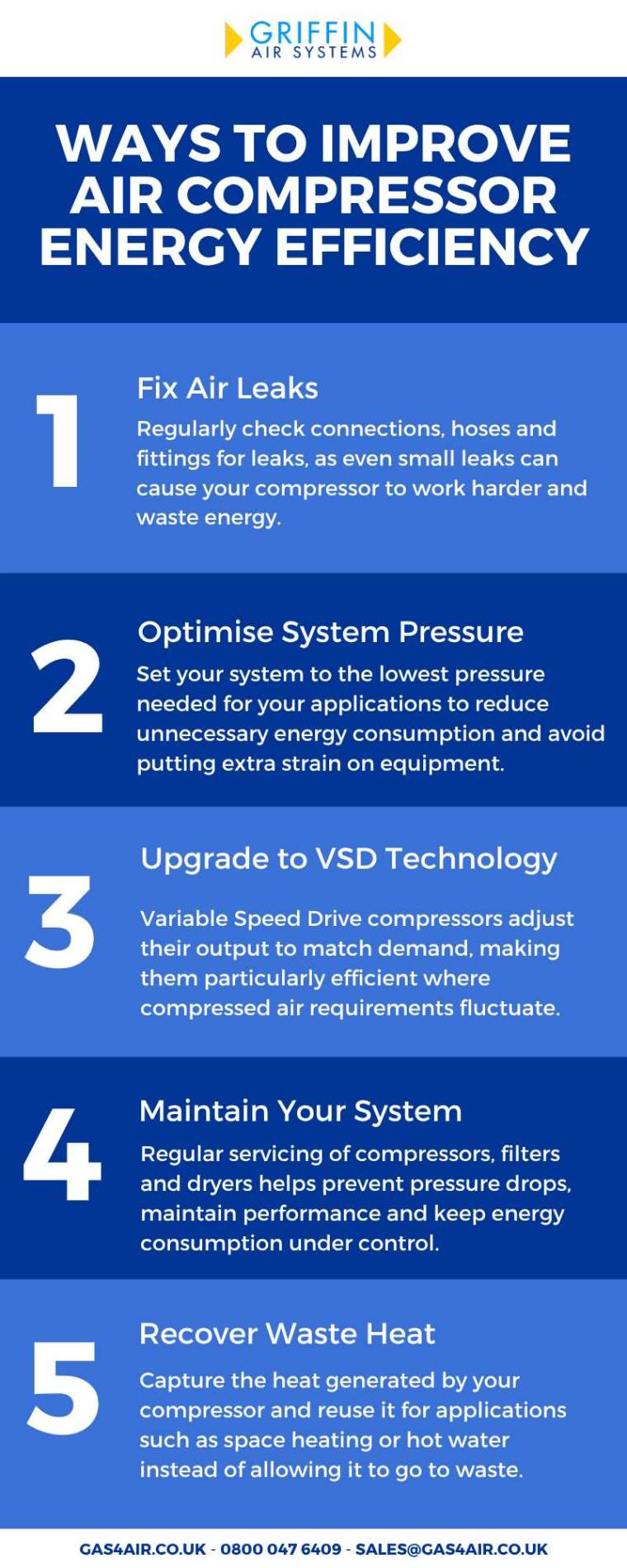
Air leaks represent a continuous and often invisible drain on system performance. Unlike mechanical faults that cause immediate disruption, leaks quietly reduce available air pressure and force compressors to run longer or more frequently to compensate. This results in unnecessary energy consumption and increased wear on equipment.
Leaks commonly develop at connection points such as couplings, valves, and hoses. Over time, vibration, thermal expansion, and general wear can degrade seals and fittings, allowing compressed air to escape.
How to identify and fix air compressor leaks
A structured leak management approach is essential. This involves routine inspection, prioritisation of repairs, and ongoing monitoring.
- Carry out scheduled leak detection surveys across the system
- Focus on high-risk areas such as flexible hoses and quick-connect fittings
- Repair leaks using appropriate sealing methods rather than temporary fixes
- Replace worn components instead of repeatedly patching them
Addressing leaks improves system stability and is one of the most direct ways to achieve air compressor energy savings.
2. Optimise Compressed Air System Pressure
System pressure has a direct influence on how hard your compressor needs to work. Operating at a higher pressure than required increases the energy needed to compress air, while also placing additional strain on downstream components.
In many systems, pressure is set conservatively high to compensate for inefficiencies elsewhere, such as leaks or pressure drops. This approach masks underlying issues rather than resolving them.
Best practices for pressure optimisation
Effective pressure management involves aligning compressor output with actual operational requirements.
- Review the minimum pressure required at each point of use
- Install regulators to ensure consistent delivery at the required level
- Identify and eliminate pressure drops caused by undersized pipework or blocked filters
- Avoid using pressure increases as a substitute for proper system design
By refining pressure settings, you can achieve a more balanced and efficient air compressor setup.
3. Maintain Filters and Dryers Regularly
Filters and dryers play a vital role in maintaining air quality and protecting downstream equipment. However, when these components become clogged or inefficient, they create resistance within the system. Inefficient components force the compressor to work harder to maintain output, reducing overall efficiency. Routine maintenance of components such as filters and dryers is essential to ensuring your compressed air system runs efficiently.
Maintenance checklist
- Replace filters on schedule
- Inspect dryers for performance issues
- Monitor pressure across components
Routine maintenance ensures consistent energy efficiency air compressor performance.
4. Improve Air Intake Conditions
The quality and temperature of intake air directly affect compressor performance. Compressors operate more efficiently when drawing in cooler, denser air, as this reduces the amount of work required to achieve the desired pressure. Poor intake conditions, such as warm or contaminated air, force the compressor to work harder and can also impact internal components over time.
Air compressor air intake optimisation tips
- Position intake in a cool, ventilated area
- Avoid drawing air from hot machinery zones
- Use proper filtration to maintain air quality
This simple adjustment can contribute to measurable air compressor energy savings.
5. Use the Most Energy Efficient Air Compressor for Your Needs
Choosing the correct compressor type is fundamental to achieving long-term efficiency. Different technologies are designed for different duty cycles, pressure requirements, and air quality needs. Using an unsuitable compressor often leads to inefficient operation, increased maintenance requirements, and reduced lifespan.
Matching compressor type to application
- Rotary screw compressors are suited to continuous, steady demand environments
- Piston compressors are typically better for intermittent use
- Oil-free compressors are essential where air purity is critical
Selecting the most energy efficient air compressor for your specific application ensures that the system operates within its optimal performance range.
6. Upgrade to a Variable Speed Drive (VSD) Compressor
A Variable Speed Drive (VSD) air compressor adjusts its motor speed in response to real-time air demand. Instead of operating at a fixed output, it modulates performance to match system requirements, reducing unnecessary energy use during periods of low demand. This makes VSD compressors particularly effective in environments where air usage fluctuates throughout the day. Upgrading to a VSD air compressor is an excellent way to better optimise your compressed air system’s efficiency.
Benefits of VSD technology
- Matches energy consumption with actual demand rather than maximum capacity
- Reduces load/unload cycling, which can be inefficient and mechanically stressful
- Provides smoother system pressure control
For many applications, upgrading to a VSD unit can significantly improve overall compressed air efficiency improvement, particularly where demand variability is high.
7. Recover Waste Heat from Compressors
Up to 90% of the electrical energy used by a compressor is converted into heat. In many systems, this heat simply dissipates and is wasted. Compressor energy recovery systems can be used to repurpose this otherwise wasted heat, improving the energy efficiency and bringing down costs.
How to utilise your air compressor system’s waste heat
- Space heating for workshops
- Preheating water for industrial processes
- Integration with HVAC systems
Heat recovery transforms wasted energy into a valuable resource, improving overall compressed air efficiency.
8. Eliminate Unnecessary Uses of Compressed Air
In many facilities, compressed air is used simply because it is readily available, rather than because it is the most efficient option. In addition to optimising your compressed air system for maximum efficiency, it is also essential to understand when and when not to use compressed air. There are applications which will be better suited to alternatives, and removing them from your compressed air system can improve the overall efficiency and cost-effectiveness of your system. Reviewing end-use applications and replacing inappropriate uses can make immediate improvements to your compressed air efficiency.
Improving usage efficiency
- Identify processes where compressed air is being used unnecessarily
- Replace with electric or mechanical alternatives where appropriate
- Introduce controls to limit non-essential usage
Reducing unnecessary air compressor use ensures that compressed air is reserved for applications where it delivers the most value and provides immediate energy savings.
9. Implement a Central Control System
It is often more efficient to use multiple smaller compressors than a singular large one. However, to get the most from and efficiently run these set-ups requires implementing effective central controls. Modern control systems allow compressors to respond dynamically to changing demand. By coordinating multiple compressors and adjusting output in real time, these systems prevent inefficiencies such as overproduction or unnecessary idle running.
Key capabilities
- Automated sequencing of compressors
- Continuous monitoring of system performance
- Identification of inefficiencies through data analysis
Air compressor system smart controls enable you to effectively operate more efficient multi-compressor setups more easily.
10. Conduct a Professional Energy Audit
To implement the improvements outlined in this list, you first need to identify where your compressed air system is underperforming. A professional compressed air system energy audit evaluates system performance, highlights inefficiencies, and provides practical recommendations. With these insights, you can take targeted action to optimise your system, improve efficiency, and reduce costs.
Benefits of an audit
- Pinpoints hidden energy losses
- Provides data-driven recommendations
- Helps prioritise investment decisions
An audit is essential for businesses aiming to achieve maximum air compressor energy savings.
Key Takeaways for Air Compressor Energy Savings
- Air leaks can waste significant compressed air output
- Lowering system pressure reduces energy consumption significantly
- VSD compressors are often the most energy-efficient air compressor option
- Heat recovery can minimise one of the biggest sources of waste in compressed air systems
- Regular maintenance is critical for maintaining an energy efficient system
Frequently Asked Questions
What is the most energy efficient air compressor?
The most energy efficient air compressor depends on your application, but VSD rotary screw compressors are typically the best option due to their ability to adjust output to match demand.
How can I improve air compressor energy efficiency quickly?
You can quickly improve air compressor energy efficiency by fixing leaks, lowering system pressure, and ensuring filters are clean. These changes deliver immediate savings with minimal investment.
How often should a compressed air system be audited?
A professional compressed air system audit is typically recommended every few years, or whenever there are changes in demand, production processes, or system performance.
Improve Your Air Compressor Efficiency with Griffin Air Systems
Optimising your compressed air system is one of the most effective ways to reduce costs and improve operational performance. By implementing the strategies outlined above, your business can significantly improve its compressed air system’s energy efficiency.
Griffin Air Systems are a dedicated team of compressed air specialists. Our experts are here to help you meet your compressed air needs while minimising costs by optimising your system’s efficiency. Get in touch today for help improving your air compressor energy efficiency.