Air compressors are a key part of many workshops and industrial sites across the UK, but when something goes wrong it usually shows up as a sudden drop in performance or a complete loss of usable air. If you’re dealing with an air compressor that isn’t building pressure, or a unit that seems to be running but delivering very little output, it can quickly disrupt day-to-day operations. For engineers, technicians and site managers, understanding what’s causing the problem is essential to avoiding unnecessary downtime.
This guide looks at the most common reasons behind compressor not building pressure faults, how to diagnose issues such as low discharge pressure or an air compressor losing pressure, and the most effective ways to fix and prevent them.
Table of Contents:
- What Does It Mean When An Air Compressor Is Not Building Pressure?
- How To Diagnose An Air Compressor Losing Pressure
- Air Leaks In The System
- Faulty Pressure Switch Or Regulator
- Worn Internal Components (Valves Or Piston Rings)
- Blocked Air Intake Or Restricted Airflow
- Compressor Undersized For Demand
What Does It Mean When An Air Compressor Is Not Building Pressure?
When an air compressor is not building pressure, it usually means the system is struggling to reach its normal operating level, even though the motor is still running. In simple terms, air is either not being compressed properly or it is escaping somewhere before it can build up in the tank.
This can show up in a few different ways, such as weak tool performance, longer recovery times, or the compressor running continuously without ever reaching the expected cut-off point. In many cases, it may feel like the air compressor won’t build pressure at all, even though it appears to be functioning.
Issues like this are often grouped under broader symptoms such as low discharge pressure or inconsistent airflow, which usually point to an underlying fault in the system. Once you understand what the behaviour looks like in practice, it becomes easier to narrow down whether you are dealing with a simple air leak or something more mechanical.
How To Diagnose An Air Compressor Losing Pressure
When an air compressor is losing pressure, the key is to approach it methodically rather than jumping straight to major repairs. Most issues behind air compressor low pressure faults start with simple system problems, so a structured check can quickly narrow things down.
Start by observing how the compressor behaves during operation. If it struggles to reach cut-out pressure, cycles continuously, or drops pressure under load, that usually points to an underlying issue that needs tracing.
Step-By-Step Inspection Process
Begin with a visual and audible check of the system. Look for obvious signs of air escaping, especially around hoses, fittings, and the tank itself. Even a small leak can prevent the system from holding pressure properly.
Next, listen closely while the compressor is running. A hissing sound often indicates a leak that may not be immediately visible. Pay attention to whether the pressure gauge rises steadily or stalls before reaching normal operating levels.
Finally, monitor how quickly pressure builds and drops during use. If the system builds slowly or loses pressure unusually fast, it may indicate a restriction or fault within the compression process.
Identifying System vs Mechanical Faults
At this stage, it’s important to separate external issues from internal ones. External problems are usually related to leaks, blocked filters, or incorrect settings, while internal faults often involve worn valves, piston rings, or reduced compression efficiency.
Understanding this distinction makes it much easier to decide whether you are dealing with a simple fix or a deeper mechanical issue that may require professional servicing from Griffin Air Systems.
1. Air Leaks In The System
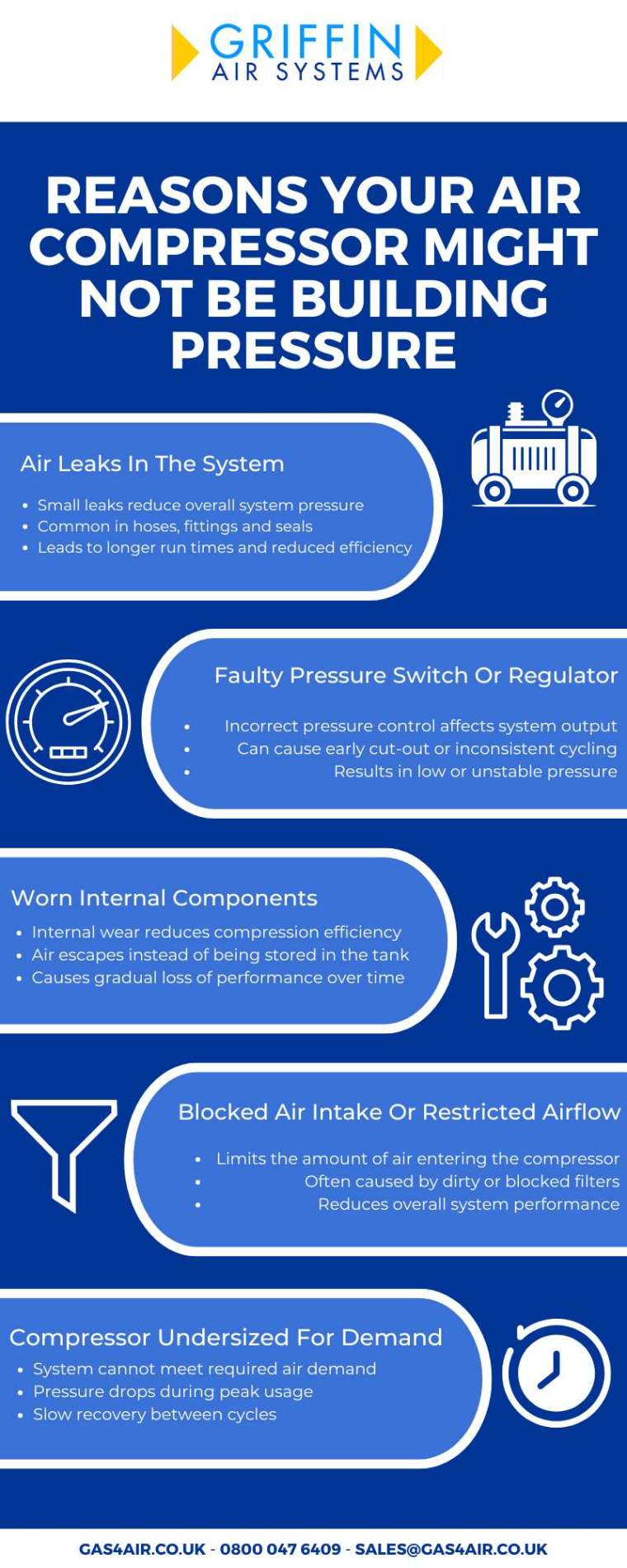
Air leaks are one of the most common reasons behind low pressure issues with air compressors, and they can have a much bigger impact than most people realise. Even a small leak in a hose, fitting or seal can stop the system from maintaining consistent pressure, leading to longer run times and reduced performance.
In many cases, leaks are also the reason an air compressor losing pressure issue develops gradually rather than failing all at once. The compressor may still run normally, but it struggles to hold air in the tank or maintain output under load.
Fix: How To Identify And Repair Air Leaks
Start by checking all visible hoses, connectors and fittings while the system is pressurised. Listen closely for any hissing sounds, especially around joints and connection points. Soapy water can also be used to highlight escaping air, as bubbling will appear where leaks are present.
Once identified, tighten loose fittings where possible or replace damaged hoses and seals. If the tank itself is leaking, this is more serious and may require professional repair or replacement depending on the severity.
Prevention: How To Avoid Air Leaks
Preventing leaks comes down to regular inspection and maintenance. Checking connections routinely helps catch wear early before it develops into a pressure loss issue.
Using high-quality fittings and seals also reduces the risk of failure over time, especially in high-use environments. It’s also good practice to carry out periodic pressure tests to ensure the system is holding air correctly under normal operating conditions.
2. Faulty Pressure Switch Or Regulator
A faulty pressure switch or regulator is another common reason an air compressor is not building pressure correctly. These components control when the compressor cuts in and out, as well as how air is delivered through the system. If either part is malfunctioning, the compressor may run incorrectly, fail to reach the required pressure, or shut off too early.
In some cases, this can present as low discharge pressure, where the system is technically running but not delivering air at the correct level for tools or equipment.
Fix: Repairing Or Replacing Pressure Controls
Start by checking whether the pressure switch is responding correctly. If the compressor is not cutting out at the correct pressure, or is cycling irregularly, the switch may need adjusting or replacing.
The regulator should also be inspected for damage or incorrect settings. Adjusting the output pressure may resolve minor issues, but if the component is worn or inconsistent, replacement is often the most reliable fix.
Prevention: Keeping Pressure Controls Reliable
Regular inspection of pressure controls helps prevent unexpected failures. This includes checking calibration settings and ensuring the switch is operating within the correct range for the system.
Avoiding overloading the compressor also reduces stress on these components, helping them maintain accuracy and reliability over time. Routine servicing is especially important in high-demand environments where the system is used frequently.
3. Worn Internal Components (Valves Or Piston Rings)
Worn internal components are a more serious fault that can stop an air compressor from building pressure properly. Over time, parts such as valves and piston rings degrade, reducing the system’s ability to compress air efficiently and allowing air to escape internally instead of being stored in the tank.
This type of issue often develops gradually and may first appear as an air compressor losing pressure under load, longer recovery times, or reduced overall output.
Fix: Servicing Internal Compressor Parts
If internal wear is suspected, the first step is to confirm compression loss through testing and inspection. Worn piston rings or damaged valves will often show clear signs of reduced pressure build-up even when external components are functioning correctly.
Depending on the severity, components may be cleaned, repaired or replaced. In many cases, a full service of the compressor head is required to restore proper performance.
Prevention: Reducing Internal Wear
Preventing internal wear comes down to consistent servicing and correct operation. Ensuring proper lubrication, avoiding overheating, and running the compressor within its recommended duty cycle all help extend component life.
Regular maintenance checks also allow early detection of wear, reducing the risk of sudden failure and helping maintain stable system pressure over time.
4. Blocked Air Intake Or Restricted Airflow
A blocked air intake or restricted airflow is another aspect that can lead to low pressure problems, as the system simply cannot draw in enough air to compress effectively. This is often caused by dirty filters, debris buildup, or obstructions in the intake path, all of which reduce overall performance.
In some cases, this can also contribute to an air compressor not building pressure at all, especially if the restriction is severe enough to starve the system of air.
Fix: Clearing Airflow Restrictions
Start by inspecting the air intake filter for dirt, dust or clogging. If it is heavily contaminated, cleaning or replacing it is usually the quickest fix.
Next, check the intake path for any physical blockages or damage. Ensuring a clear and unrestricted airflow route allows the compressor to operate at its intended efficiency and restore normal pressure levels.
Prevention: Maintaining Clean Airflow
Preventing airflow issues is mainly about routine maintenance. Regularly cleaning or replacing intake filters helps avoid buildup that can restrict performance over time.
It’s also important to keep the compressor in a clean operating environment where possible, reducing the amount of debris and airborne particles entering the system in the first place.
5. Compressor Undersized For Demand
Sometimes the problem isn’t a fault with the equipment at all, but the fact it was never quite the right size for the job. When demand exceeds what the compressor can realistically supply, it will struggle to keep up and may appear as though it’s not building pressure properly.
This tends to show up during busy periods. The system might reach normal pressure briefly, but as soon as multiple tools are used at once, it can’t recover quickly enough and the pressure starts to fall away again. Over time, this creates a constant cycle of poor performance and recovery.
Fix: When Capacity Is The Real Issue
The first step is to compare actual air usage with what the compressor can deliver. If the gap is too large, the system will always feel under strain.
In that situation, there are a few practical options. Upgrading to a larger unit is the most direct fix. Alternatively, adding an air receiver tank can help balance short bursts of demand, and in some cases, simply staggering tool use can reduce pressure drops.
Prevention: Planning For Real-World Demand
The best way to avoid this problem is to size the system based on peak demand rather than average use. That small difference is often what causes ongoing performance issues later on.
Allowing some headroom in capacity also helps the system run more comfortably, reduces wear, and prevents it from constantly working at its limit.
Key Takeaways For Air Compressor Not Building Pressure
- Most issues with an air compressor not building pressure come down to a small number of common causes, including leaks, airflow restrictions, worn components, and incorrect system sizing
- Diagnosis should always start with simple external checks before moving on to internal mechanical faults
- Air leaks are often subtle but can have a major impact on performance and efficiency if left unresolved
- Mechanical wear, such as damaged valves or piston rings, typically develops gradually and affects overall compression quality
- Blocked filters and restricted airflow are quick to fix but frequently overlooked causes of poor performance
- Not all pressure issues are faults, as an undersized compressor can mimic system failure under high demand
- Regular maintenance and correct system setup are the most effective ways to prevent recurring pressure problems
- Addressing early warning signs helps reduce downtime and avoids more costly repairs later on
FAQs
Why Is My Compressor Running But Not Filling The Tank?
A compressor running but not filling the tank usually points to a problem with compression or air loss in the system. This can happen due to worn valves, piston rings, or a significant air leak that prevents pressure from building up inside the tank.
In some cases, the issue may also be linked to a blocked intake filter or a faulty pressure switch, both of which can stop the system from operating efficiently. A step-by-step inspection of external components is usually the best place to start before moving on to internal faults.
Why Is My Compressor Running But No Pressure?
If a compressor is running but producing no pressure, it typically means air is not being compressed effectively or is escaping before it reaches the tank. This is often caused by internal wear, such as damaged valves or piston rings, which reduces the system’s ability to generate pressure.
It can also be caused by severe leaks in hoses, fittings, or the tank itself. In this situation, the compressor may sound normal but will show little to no increase on the pressure gauge.
What To Do When Your Air Compressor Won’t Build Pressure?
When an air compressor won’t build pressure, the best approach is to start with simple checks before assuming a major fault. Begin by inspecting for visible leaks, checking the air filter, and confirming that all connections are secure.
If those areas are fine, the issue may lie with internal components like valves or piston rings, or with control parts such as the pressure switch. At that stage, servicing or professional inspection is usually required to properly diagnose and resolve the problem.
Keep Your Air Systems Running Smoothly With Griffin Air Systems
Air compressor issues like not building pressure can often start small but quickly turn into bigger operational problems if they’re not addressed early. In most cases, the root cause comes down to a handful of familiar issues such as leaks, airflow restrictions, worn internal components, or systems that are simply not sized correctly for the demand placed on them.
The key takeaway is that most faults can be diagnosed methodically, starting with simple external checks before moving into more complex mechanical components. Regular maintenance and correct system setup play a huge role in preventing repeat issues and keeping performance consistent.
If your system is struggling with pressure loss or unreliable performance, Griffin Air Systems can help diagnose the issue and get your equipment back to full efficiency. Get in touch with our team or explore our compressor services to find the right support for your setup.