Air compressors are an essential piece of equipment for many workshops, trade businesses and manufacturing environments across the UK. If you’re trying to decide between different compressor options, understanding the practical differences between single stage and two stage air compressors can help you choose equipment that matches how you actually plan to use it.
This guide explains how these compressors work, when each type is most useful, and what to think about in terms of performance and running costs. Whether you’re comparing single stage vs two stage air compressors for a new purchase or looking to upgrade existing equipment, this guide should help make the decision clearer.
Contents:
- How Do Air Compressors Work?
- What is a Single Stage Air Compressor?
- What is a Two Stage Air Compressor?
- Single Stage vs Two Stage Air Compressors: What’s the Difference?
- How to Choose the Right Air Compressor for Your Needs
- Why Choose Griffin for Air Compressors?
How Do Air Compressors Work?
Air compressors work by drawing in air from the surrounding environment and squeezing it into a smaller space to increase pressure. That stored pressure can then be used to power tools, inflate equipment, or support more complex industrial processes.
Most compressors rely on either piston-driven systems or rotary mechanisms to generate pressure. While the internal engineering can vary, the basic principle is always the same. Air is pulled in, compressed, then stored in a tank until it is needed.
In simple terms, a compressor acts like a pressure storage system for air-powered tools. The main differences between compressor types usually come down to how efficiently they can build and maintain that pressure during use.
The basic process looks like this:
- Air is drawn into the compressor through an intake valve
- The air is compressed to increase pressure
- The compressed air is cooled to reduce heat build-up
- Pressurised air is stored in a tank ready for use
Understanding this process helps explain why different compressor designs are better suited to different workloads, especially when comparing single stage and two stage systems.
What is a Single Stage Air Compressor?
A single stage air compressor is a compressor system that compresses air once before it is stored in the tank for use. These compressors are commonly used in smaller workshops, light trade environments and home-based workspaces where very high air pressure isn’t required.
For many users, a single stage air compressor is a practical starting point because the design is relatively straightforward. This simplicity can make them easier to operate and often cheaper to maintain over time, which is helpful for businesses watching operating costs.
How a Single Stage Air Compressor Works
Single stage compressors pull air into a cylinder where a piston compresses the air during one full stroke cycle. The compressed air is then pushed directly into a storage tank where it is held until needed for tools or equipment.
Because compression happens in one step, these compressors typically work best when they are allowed to run in shorter cycles rather than continuously. Continuous heavy operation can generate heat and reduce overall efficiency.
Most single stage compressor systems will include:
- An air intake filter to keep debris out of the system
- A piston and cylinder compression chamber
- A pressure storage tank
- Safety valves to control pressure levels
When a Single Stage Compressor Is Usually Enough
Single stage air compressors are often enough if you only need compressed air for lighter or intermittent work. Common uses include:
- Operating light pneumatic tools
- Inflating tyres or equipment
- Supporting small scale workshop tasks
- Supporting maintenance or repair work that doesn’t require constant airflow
They are often a good option for smaller businesses or trade users who do not need continuous industrial airflow.
Benefits of Single Stage Air Compressors
- Lower purchase cost compared with two stage air compressors
- Straightforward design can mean fewer components to maintain
- Generally lighter and easier to move around a workspace
- Good option for users who need compressed air occasionally rather than continuously
Limitations to Consider
- Lower maximum pressure output compared with more advanced compressor systems
- Less suitable for continuous industrial or manufacturing workloads
- Can become less efficient if pushed beyond their intended operating capacity
- May generate more heat during prolonged use
For users comparing single stage vs two stage air compressor options, thinking about how often the compressor will run is often just as important as looking at power output.
What is a Two Stage Air Compressor?
A two stage air compressor is a more advanced compressor system that compresses air twice before it is stored in the tank. These compressors are commonly used in heavier trade environments, manufacturing settings and situations where higher air pressure and continuous performance are required.
Two stage compressors are often chosen when users need more power, better efficiency during longer running times, or consistent airflow for demanding tools and machinery. While they tend to cost more upfront, they can offer better long-term performance for businesses that rely heavily on compressed air.
How a Two Stage Air Compressor Works
A two stage air compressor increases pressure through a two-step process. First, air is drawn into the first cylinder where it is partially compressed. The air is then cooled using an intercooler system before being compressed again in a second cylinder to reach higher pressure levels.
Cooling the air between compression stages helps reduce heat build-up and improves overall efficiency. This is one of the main reasons two stage compressors are often preferred in environments where the compressor needs to run for longer periods.
Most two stage compressor systems will include:
- Two compression cylinders
- Intercooling systems to manage heat
- Pressure regulation components
- Larger storage tanks to support continuous airflow
This design helps reduce strain on individual components during heavy use.
When You Might Need a Two Stage Air Compressor
Two stage air compressors are often better suited to businesses or users who need consistent, high-pressure airflow. Typical applications include:
- Automotive repair and spray painting work
- Manufacturing and production environments
- Engineering and fabrication workshops
- Industrial or commercial facilities with high air demand
If tools or machinery require continuous compressed air rather than short bursts of power, a two stage system is usually a better match.
Benefits of Two Stage Air Compressors
- Higher maximum pressure output compared with single stage air compressors
- Better energy efficiency during heavy or continuous use
- Reduced wear on components due to staged compression
- Improved performance for industrial and commercial workloads
Limitations to Consider
- Higher upfront purchase cost
- Usually larger and heavier than single stage compressor units
- May require more regular professional servicing to maintain peak performance
For businesses comparing 1 stage vs 2 stage air compressor options, two stage models often make sense when compressed air is a core part of daily operations rather than an occasional requirement.
Single Stage vs Two Stage Air Compressors: What’s the Difference?
Choosing between a single stage vs two stage air compressor usually comes down to how much pressure you need and how often the compressor will be running. Both types store compressed air to power tools and machinery, but they perform differently in demanding environments.
Performance and Typical Uses
Single stage compressors are best suited to lighter tasks and intermittent use. They work well for smaller workshops, maintenance tasks and general trade work where airflow demand is lower
.
Two stage air compressors are designed for heavier workloads and higher pressure requirements. They are commonly used in manufacturing, automotive work and environments where compressed air is needed continuously rather than in short bursts.
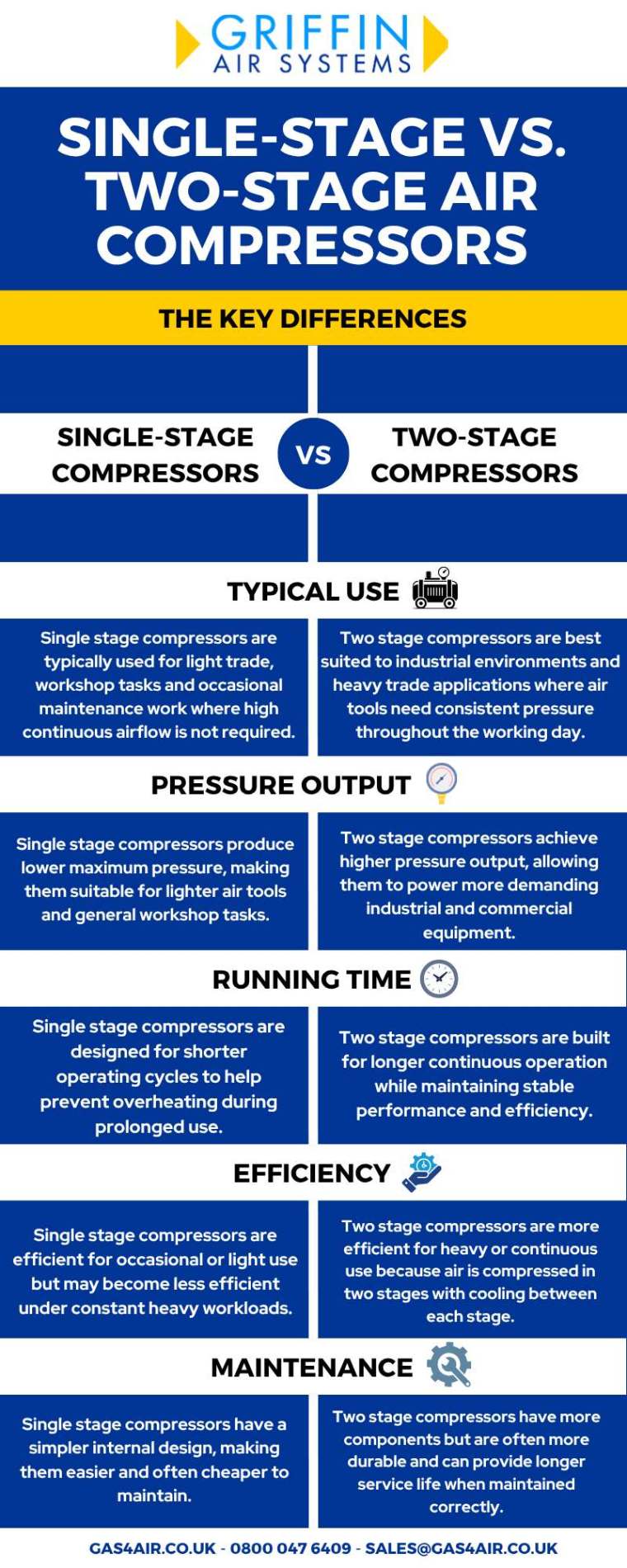
| Single Stage | Two Stage | |
| Typical Use | Light trade and workshop tasks | Industrial and heavy trade use |
| Pressure Output | Lower maximum pressure | Higher maximum pressure |
| Running Time | Shorter operating cycles | Longer continuous operation |
| Efficiency | Good for occasional use | Better for heavy workloads |
| Maintenance | Simpler system | More components but often longer lasting |
Reliability
Single stage air compressors have fewer internal components, which can make them straightforward to maintain. They are dependable for lighter workloads but may show more wear if pushed to run constantly at higher pressure levels.
Two stage compressors use two compression cylinders, sharing the workload across the system. This design often improves durability and helps components last longer under continuous operation, making them popular in commercial and industrial settings.
Efficiency
Two stage air compressors tend to be more efficient for extended use. Air is compressed once, cooled, then compressed again, which reduces heat build-up and improves overall performance during long running periods.
Single stage compressors are still efficient for lighter tasks but may become less economical if used continuously for heavy applications.
Cost and Long-Term Value
Single stage compressors usually have a lower upfront purchase cost and suit users who need compressed air occasionally.
Two stage air compressors cost more initially but can provide better long-term value for businesses that rely heavily on compressed air systems because of their improved durability and efficiency during constant operation.
Understanding the difference between 1 stage vs 2 stage air compressors helps match equipment to actual usage needs, rather than focusing purely on purchase price.
How to Choose the Right Air Compressor for Your Needs
Deciding which compressor is right for you usually comes down to how much air power you need in daily use and how long the compressor will be running at a time. Some users only need compressed air for light workshop tasks, while others rely on constant airflow for more demanding work. Matching the equipment to real working conditions usually matters more than choosing based on specifications alone.
Think About How You Plan to Use the Compressor
Light-duty tasks usually work well with a single stage compressor. These models are commonly used for small workshop jobs, maintenance work and occasional use of pneumatic tools where air is delivered in short bursts rather than constantly. They tend to be popular with smaller businesses or trade users who need reliable performance without investing in industrial-level equipment.
More demanding environments often benefit from a two stage compressor because the system is designed to cope with heavier workloads and longer running times. These compressors are often found in manufacturing, automotive and engineering environments where air tools need consistent pressure throughout the working day. When comparing compressor types, it is often less about maximum power and more about how stable the airflow remains during extended use.
Consider Pressure and Tool Requirements
Different air tools need different levels of pressure and airflow. Higher pressure output is often associated with two stage compressor systems because air is compressed in two steps, which helps maintain performance during continuous operation. This design can reduce heat build-up and improve overall efficiency when the compressor is running for long periods.
Single stage compressors still perform very well for lighter equipment such as inflation tools, finishing tools and general maintenance tasks. For many buyers comparing compressor options, the best choice is usually the one that provides enough pressure for the job without over-investing in power that will rarely be used.
Think About Workspace and Practical Use
Workspace size and mobility can also influence the decision. Smaller compressors are easier to move around workshops or transport between job sites, which makes them useful for mobile trade work. Larger, heavier compressors are usually better suited to permanent workshop installations where performance and reliability matter more than portability.
Budget and Long-Term Value
Initial purchase cost is often lower for single stage compressors, which makes them attractive for smaller operations or users buying their first air compressor. Maintenance is often simpler because the design contains fewer internal components.
Higher specification compressor systems tend to cost more upfront but can provide better long-term value in high-use environments because of improved efficiency and durability over time.
Why Choose Griffin for Air Compressors?
When you choose Griffin Air Systems, you’re not just getting equipment, you’re getting support from a team with decades of experience in compressed air solutions. We have been helping customers across the UK select, install and maintain air compressor systems for many years, whether they need a smaller unit for light workshop use or a larger system for more demanding industrial applications.
Our service goes beyond supplying equipment. We help customers choose the right compressor for their needs, then continue to support them with installation guidance, servicing and maintenance plans designed to keep systems running efficiently. Our team of manufacturer-trained technicians can assist with routine servicing, repairs and system upgrades, helping reduce downtime and extend equipment life.
We also maintain high industry standards through recognised quality and safety practices. Alongside equipment sales and servicing, we offer flexible options such as hire and maintenance packages, giving businesses more choice when managing their compressed air systems and budgets.
Key Takeaways for 1 Stage vs 2 Stage Air Compressors
- Single stage air compressors are best suited to lighter, intermittent workloads such as small workshop tasks, inflation work and general maintenance jobs where high continuous pressure isn’t required.
- Two stage air compressors are better suited to heavy-duty, continuous or industrial use where consistent airflow and higher pressure output are needed throughout the working day.
- The main difference between 1 stage vs 2 stage air compressors is how pressure is generated and maintained, with two stage systems offering better efficiency during longer running periods.
- Single stage compressors usually have a lower upfront cost and simpler maintenance requirements, making them a good entry-level option for smaller businesses or trade users.
- Two stage compressors cost more initially but can provide better long-term value in high-use environments due to improved durability, efficiency and reduced component wear.
- Performance and running costs matter more than purchase price alone when choosing between single stage vs two stage air compressor options.
- Workspace size, portability requirements and the type of air tools being used should all influence the final decision.
- Matching compressor output to real working demand helps improve efficiency and extend equipment lifespan.
FAQs
What does a 2-stage air compressor mean?
A two stage air compressor means air is compressed twice before it is stored in the tank, which helps achieve higher pressure levels and better efficiency during continuous operation. The air is first compressed in one cylinder, then cooled using an intercooler before being compressed again in a second cylinder. This process reduces heat build-up and helps the compressor perform more efficiently during longer running cycles, making two stage systems popular in industrial and heavy trade environments where consistent airflow is important.
Is a two-stage air compressor better than a single-stage?
A two stage air compressor is generally better than a single stage compressor for heavy or continuous use, but the best option depends on how the compressor will be used. Two stage compressors provide higher pressure output and better efficiency during long operating periods, which makes them suitable for manufacturing, automotive and engineering applications. Single stage compressors can still be the better choice for lighter tasks, smaller workshops or users who only need compressed air occasionally, as they are usually more affordable and simpler to maintain.
What is the key difference between a single-stage and multi-stage compressor?
The key difference between a single-stage and multi-stage compressor is how many times the air is compressed before being stored. A single-stage compressor compresses air once, making it simpler and often more cost-effective for light use. Multi-stage compressors compress air multiple times, which allows for higher pressure output, better efficiency and improved performance during continuous operation. Multi-stage systems are usually chosen for commercial or industrial applications where compressed air is a core part of daily operations.
Can you replace a 3 phase compressor with a single phase compressor?
Replacing a three phase compressor with a single phase compressor is usually possible, but it depends on the power requirements of the system and the electrical supply available at the site. Three phase compressors are typically used in industrial settings because they provide more stable power delivery for larger equipment. Single phase compressors can work well for smaller applications, but they may not provide enough power for high-demand industrial machinery. It is always best to check electrical compatibility and consult a qualified technician before making changes to compressor power systems.
What is the main difference between single-stage and two-stage air compressors?
The main difference between single stage and two stage air compressors is how the air is compressed before it is stored in the tank. A single stage compressor compresses air once using a single piston stroke, making it simple and cost-effective for lighter or intermittent use. A two stage compressor compresses air in two steps, with an intercooling phase between compression stages. This helps reduce heat build-up, improves efficiency and allows the compressor to reach higher pressure levels, which is why two stage systems are often used in industrial, manufacturing and heavy trade environments where continuous airflow is required.
What maintenance is required for a two-stage compressor?
Two stage compressors require regular maintenance and servicing to keep them operating efficiently and to help extend equipment lifespan. This usually includes checking and cleaning air filters, inspecting valves and lubricating moving parts where required. The intercooler system should also be inspected regularly, as it plays an important role in reducing heat during the compression process. Routine servicing and early detection of wear can help prevent breakdowns, reduce downtime and keep the compressor performing reliably in demanding working environments.
Which compressor is more cost-effective for long-term use?
While two stage air compressors usually have a higher upfront purchase cost, they can be more cost-effective for long-term use, especially in high-demand environments. Their improved energy efficiency during continuous operation can help reduce running costs over time. They also tend to experience less component wear when used for heavy workloads, which can reduce maintenance and repair expenses in the long run. Single stage compressors can still be more cost-effective for users who only need compressed air for lighter, occasional tasks rather than continuous operation.
Choose the Right Compressor with Griffin Air Systems
Choosing between single stage and two stage air compressors comes down to how and where the compressor will be used. Single stage compressors suit lighter, occasional workloads, while two stage compressors are better for businesses that need consistent pressure and reliable performance throughout the working day.
If you need help choosing the right compressor, our team can help you find, install and maintain the best solution for your business. Browse our range of air compressors or visit our contact page to speak with our experts today.